Benzona Ransomware Analysis: IOCs, Decryption Possibilities, and Defense Strategies
Cyberlord Security Team Author profile
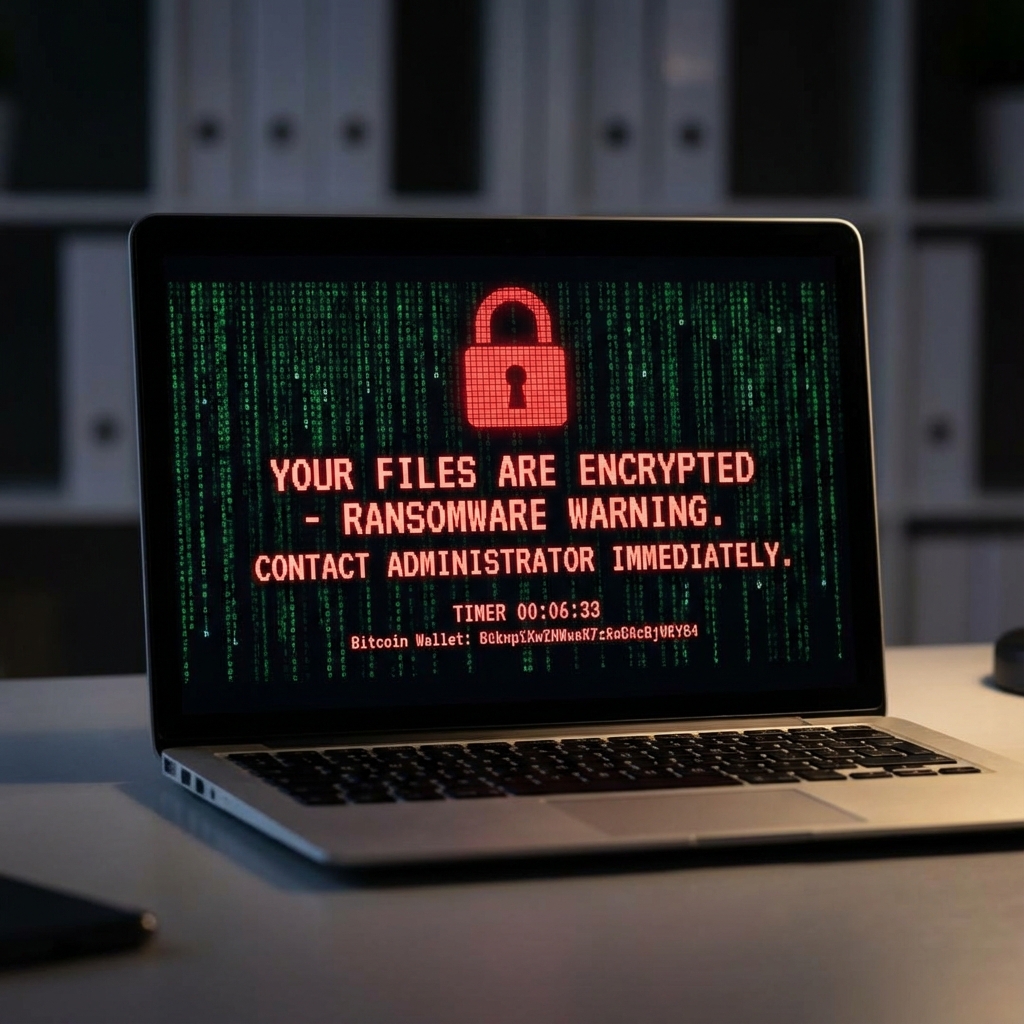
In November 2025, a sophisticated new ransomware strain known as Benzona emerged, quickly making a name for itself by targeting organizations across Europe, Asia, and West Africa. Operating on a Ransomware-as-a-Service (RaaS) model, Benzona employs aggressive double-extortion tactics, threatening to leak sensitive data if its demands are not met.
This technical analysis breaks down the Benzona attack chain, Indicators of Compromise (IOCs), MITRE ATT&CK mappings, and actionable defense strategies for security professionals.
The Benzona Attack Chain
Benzona follows a structured attack lifecycle designed to maximize impact and hinder recovery.
1. Initial Access and Execution
Attackers typically gain entry through phishing campaigns, compromised credentials, or exploiting unpatched vulnerabilities in public-facing applications. In confirmed cases, Benzona operators leveraged:
- Phishing with credential harvesting targeting VPN and Remote Desktop Protocol (RDP) portals
- Exploitation of known CVEs in internet-facing services, particularly older VPN appliances and unpatched Exchange servers
- Purchased initial access from access brokers operating in dark web forums — a hallmark of the RaaS model
Once inside, the ransomware utilizes:
- Process Injection (T1055): Injecting malicious code into legitimate processes (
svchost.exe,explorer.exe) to evade detection. - Scripting Interpreters (T1059): Leveraging PowerShell and Windows Management Instrumentation (WMI) to execute commands and disable security controls.
2. Reconnaissance and Lateral Movement
After establishing an initial foothold, Benzona operators spend 3–14 days performing internal reconnaissance before detonating the ransomware. This dwell time is used to:
- Map the Active Directory structure using
BloodHoundandSharpHoundto identify high-value targets - Identify and locate backup infrastructure (specifically to destroy it before encryption)
- Move laterally using stolen credentials,
PsExec, and WMI remote execution - Escalate privileges to domain administrator using techniques like
KerberoastingandPass-the-Hash
3. Evasion and Persistence
To maintain access and avoid antivirus detection, Benzona:
- Disables Recovery: Executes
vssadmin.exe Delete Shadows /All /Quietto destroy Volume Shadow Copies and remove Windows Restore points. - Terminates Security Processes: Kills AV/EDR software and virtualization processes to prevent analysis and ensure files are not locked during encryption.
- Modifies Registry: Alters
HKEY_LOCAL_MACHINE\SOFTWARE\Microsoft\Windows NT\CurrentVersion\Winlogonand run keys to ensure persistence across reboots. - Disables Windows Defender: Uses PowerShell
Set-MpPreference -DisableRealtimeMonitoring $trueand removes Windows Defender definitions.
4. Encryption and Exfiltration (Double Extortion)
Benzona uses a hybrid encryption scheme combining RSA-4096 (for key exchange) and AES-256 (for file encryption) — a common RaaS implementation that makes decryption without the attacker's private key computationally infeasible.
- File Extension: Encrypted files are appended with the
.benzonaextension (e.g.,financial_report.pdf.benzona). - Data Theft: Before encryption, the malware exfiltrates sensitive data to a command-and-control (C2) server using HTTPS to blend with legitimate traffic. This stolen data is the leverage for the second stage of extortion.
- Targeted File Types:
.doc,.docx,.xls,.xlsx,.pdf,.sql,.mdf,.mdb,.bak,.vhd,.vmdk,.edb— prioritizing documents, databases, and backup files.
5. The Ransom Note
After encryption is complete, a ransom note titled RECOVERY_INFO.txt is dropped in affected directories. The note contains:
- A warning that files are encrypted and data has been stolen
- A threat to publish the data if the ransom is not paid within 72 hours
- Instructions to download the Tor Browser and visit a specific
.onionchat portal for negotiation - A unique victim ID required to authenticate negotiations
Observed ransom demands ranged from $50,000 to $2.5 million in Monero (XMR) or Bitcoin (BTC), varying by organization size and industry.
MITRE ATT&CK Framework Mapping
| Tactic | Technique | ID |
|---|---|---|
| Initial Access | Phishing | T1566 |
| Execution | Command and Scripting Interpreter: PowerShell | T1059.001 |
| Persistence | Registry Run Keys / Startup Folder | T1547.001 |
| Privilege Escalation | Valid Accounts: Domain Accounts | T1078.002 |
| Defense Evasion | Process Injection | T1055 |
| Defense Evasion | Impair Defenses: Disable or Modify Tools | T1562.001 |
| Credential Access | OS Credential Dumping: LSASS Memory | T1003.001 |
| Lateral Movement | Remote Services: SMB/Windows Admin Shares | T1021.002 |
| Exfiltration | Exfiltration Over C2 Channel | T1041 |
| Impact | Data Encrypted for Impact | T1486 |
| Impact | Inhibit System Recovery | T1490 |
Indicators of Compromise (IOCs)
Security teams should scan for the following indicators to detect Benzona activity.
File Indicators
- Extension:
.benzona - Ransom Note:
RECOVERY_INFO.txt - Dropped Executables: Random 8-character alphanumeric filenames in
%TEMP%andC:\Windows\Temp
Network Indicators
- Tor Chat Portal:
http://rwsu75mtgj5oiz3alkfpnxnopcbiqed6wllyoffpuruuu6my6imjzuqd.onion/ - Leak Site:
http://benzona6x5ggng3hx52h4mak5sgx5vukrdlrrd3of54g2uppqog2joyd.onion - C2 Infrastructure: Connections over HTTPS to
.icu,.top, and newly registered.comdomains on non-standard ports
File Hashes (SHA-256)
09f7432834ce15e701aa7fcc84a9c2441c1c7e0a9cb66a6211845be73d2597cc1c895eeb1d6ab9e5268759558c765b93f4c183557cb2c457857b91532ac61982
Registry Artifacts
HKLM\SOFTWARE\Microsoft\Windows NT\CurrentVersion\Winlogon\Userinit— modified to include ransomware loader path- Deletion of
HKLM\SYSTEM\CurrentControlSet\Control\BackupRestore\FilesNotToBackup
Decryption Possibilities
There is currently no free public decryptor available for Benzona ransomware. The RSA-4096 / AES-256 hybrid encryption scheme has not been cryptographically broken.
However, organizations should consider:
- Check NoMoreRansom.org: The No More Ransom project aggregates free decryptors from law enforcement. If Benzona's infrastructure is seized in a future operation, decryption keys may become available.
- Preserve encrypted files: Even if you restore from backup, keep encrypted copies. If a decryptor is released in the future, you may be able to recover additionally affected files.
- Engage a professional incident response firm: In some cases, IR teams have recovered keys from memory forensics on systems that were not fully shut down during the encryption process.
Defense and Mitigation Strategies
Before an Attack
- Immutable Backups: Ensure offline, air-gapped, or immutable cloud backups (AWS S3 Object Lock, Azure Immutable Blob Storage). Benzona specifically targets and deletes online backups and shadow copies.
- Patch Management: Prioritize patching internet-facing systems, particularly VPN appliances, Exchange, and RDP-exposed systems — Benzona's preferred initial access vectors.
- Network Segmentation: Limit lateral movement with microsegmentation. Domain controllers, backup servers, and critical infrastructure should not be reachable from general workstation networks.
- Privileged Access Management (PAM): Enforce just-in-time privilege elevation and limit who holds domain admin rights. Benzona's damage is proportional to the privileges it gains.
- Endpoint Detection and Response (EDR): Deploy EDR solutions configured to block process injection (T1055), mass file modifications, and Volume Shadow Copy deletion.
- Multi-Factor Authentication: Enforce MFA on all VPN access, RDP access, and privileged accounts. This eliminates credential-based initial access.
During an Attack (First Hour)
- Isolate infected systems from the network immediately — do not shut them down if forensic analysis is needed. When engaged under the system owner's written authorization, an incident response team can verify isolation, preserve volatile evidence, and document the affected systems.
- Preserve memory on running systems for forensic analysis (potential key recovery).
- Alert your incident response team before attempting remediation.
- Do not pay immediately — payment is not evidence that files can be recovered and funds further attacks. When the system owner provides written authorization, a response team can verify backup integrity, examine forensic artifacts, and document realistic recovery options.
Conclusion
Benzona represents the continued evolution of RaaS threats. Its use of double extortion, extended dwell time, and systematic backup destruction makes it a formidable adversary. Organizations must move from a reactive stance to a proactive "assume breach" mentality, focusing on resilience and rapid recovery.
If you have been hit by Benzona, do not pay the ransom immediately. Contact Cyberlord Secure Services for professional incident response. Our team can assess your options, attempt key recovery from forensic artifacts, and guide your recovery process.
Frequently Asked Questions
Can I recover files encrypted by Benzona without paying? Currently, no public decryptor exists. Recovery depends on the quality of your pre-attack backups. If you had immutable or offline backups, full recovery without paying is feasible. Check NoMoreRansom.org regularly — decryptors are released when ransomware infrastructure is seized.
How long does Benzona dwell in a network before encrypting? Confirmed cases show dwell times of 3–14 days. This pre-encryption period is used for reconnaissance, lateral movement, privilege escalation, and backup destruction.
Should I pay the ransom? Law enforcement agencies (FBI, CISA, NCSC) universally advise against paying. Payment funds criminal operations and does not establish that decryption is possible. Engage a professional IR firm under the system owner's written authorization to assess backup integrity, forensic artifacts, and the available recovery options first.