How to Check Your Partner's Phone for Cheating: A Lawful Guide
CyberLord Editorial Team Author profile
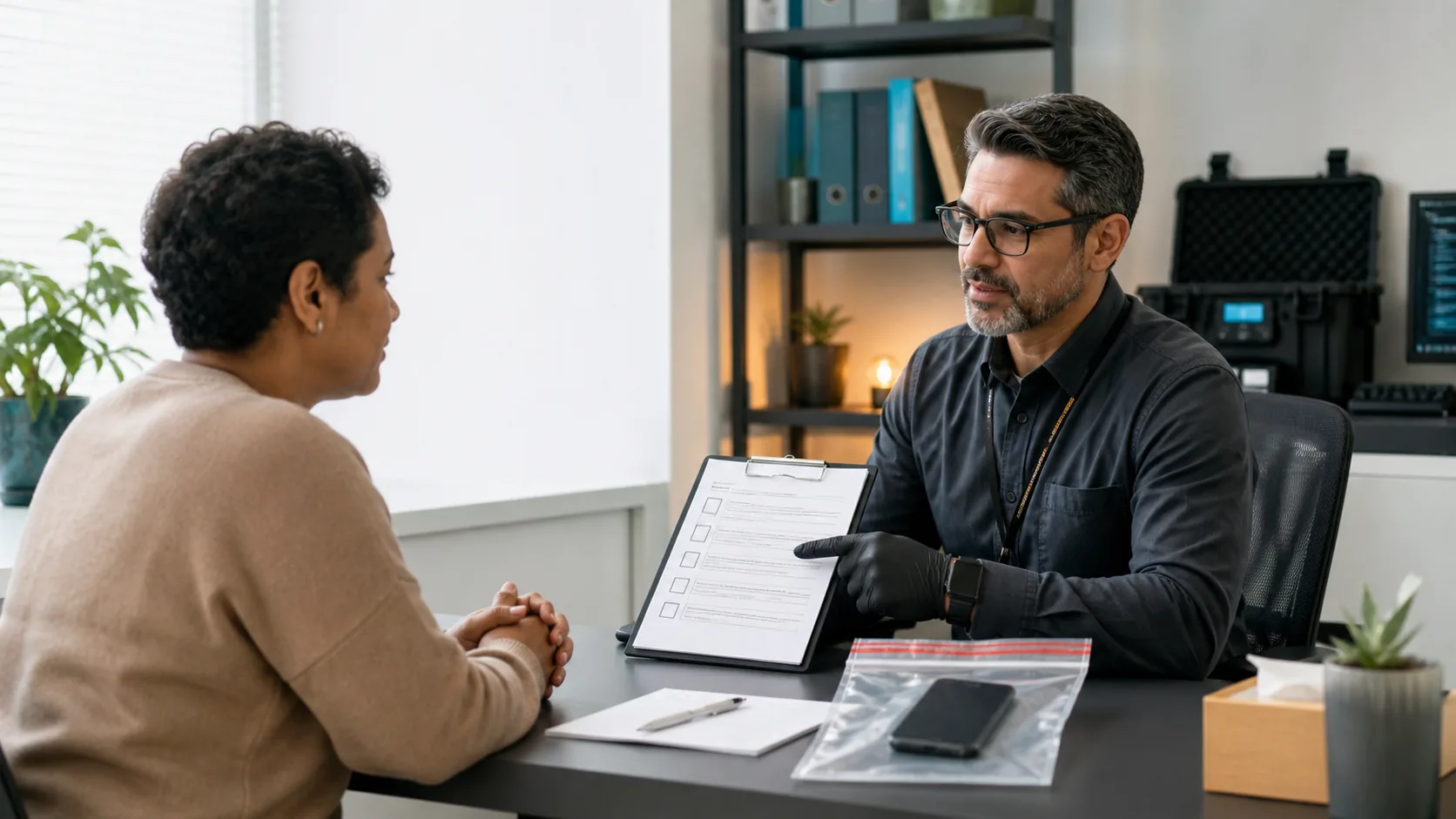
If you are searching for how to check your partner's phone for cheating, you are not alone. Relationship suspicion drives millions of searches every month, and it also drives a predatory industry of fake hackers, cloned-phone scams and stalkerware sellers who profit from exactly the fear you are feeling right now. This guide shows you every legitimate way to get answers: consent-based checks that do not cross legal lines, the behavioral signs worth recording before you touch any device, the traps to avoid, and the professionals who can help when the situation is bigger than a conversation.
The short version: there is a way to look at a partner's phone lawfully, but it almost always involves their knowledge and written authorization. There is no reliable shortcut that avoids those safeguards. Everything else advertised as one is either a crime waiting to be discovered or a scam waiting to happen.
Best tracking app for an authorized device: Check Sphnix's current compatibility, support and pricing. Sphnix is the option we evaluate first when you need guided monitoring setup for a phone you own or are legally responsible for - your own device, a minor child's phone, or a company-owned handset with written notice. It is not offered for secretly monitoring a partner.
Affiliate link: Cyberlord may earn a commission at no extra cost to you. See the full evaluation in our Sphnix tracking app review.
Authorization rule: Do not open another adult's phone, messages, cloud account, email, microphone, camera or location without informed consent or specific legal authority. Paying for the device or sharing a home does not automatically create permission. Laws differ by country and state, so confirm your position locally before acting on anything in this guide.
First, understand what the law actually protects
Before discussing technique, it helps to know why the obvious route is risky. In the United States, unauthorized access to a person's device or account can violate the Computer Fraud and Abuse Act and state computer-crime statutes. Intercepting or reading someone's electronic communications without written authorisation from the account holder raises wiretap issues. In Europe, GDPR and national privacy laws treat private communications as protected data regardless of marital status. Similar rules exist across most developed jurisdictions.
Three points matter most:
- Marriage does not equal consent. Courts have consistently rejected the argument that a wedding certificate authorizes reading a spouse's private messages.
- Device ownership is separate from account ownership. Even if you bought the handset or pay the carrier bill, the account and its contents usually belong to the person using them.
- Evidence gathered illegally can backfire. Illegally obtained material is often inadmissible in divorce or custody proceedings, and the act of gathering it can hand the other side leverage or expose you to charges.
This is why every method described below starts with knowledge and consent rather than stealth.
Signs worth recording before you check anything
A phone is rarely where verification starts; it is where confirmation happens. Before any device is involved, build a factual timeline from what you personally observe. This costs nothing, breaks no laws, and makes every later step - a conversation, a lawyer consultation, or a professional investigation - dramatically more useful.
Record observations like these, each with a date:
- Unexplained charges, cash withdrawals or new subscriptions on genuinely joint statements.
- Pattern changes: new routines, unexplained absences, sudden gym hours or work trips that cannot be verified.
- Device guarding that is new: phones flipped face-down, notifications silenced around you, password changes without explanation, or a second device that appeared recently.
- Inconsistent stories about time, location or people.
- Social signals: mutual friends acting awkwardly, new contacts appearing repeatedly, or public information that contradicts what you were told.
Keep two columns: what happened, and what you conclude. "The card statement shows a hotel charge on 14 August while he said he was in Leeds" is an observation. "He is having an affair" is a conclusion. Mixing the two is how innocent explanations get destroyed and guilty ones get missed.
The lawful ways to check a partner's phone
1. The direct transparency conversation
The most direct check costs nothing: ask. Choose a calm moment, present one or two observations from your timeline rather than accusations, and request transparency - seeing notifications together, reviewing a specific concern, or agreeing on mutual openness for a period. If a device or account is submitted to a professional, the work should begin only after the owner gives written authorisation, and the examiner should verify which apps, sessions, messages or settings are in scope rather than promise a particular relationship finding. Many couples resolve suspicion here. A partner with nothing to hide has little to lose from reassurance; a pattern of refusal after reasonable requests is itself meaningful information.
2. Checking together, on shared terms
If your partner agrees, sit together while they open the apps or messages in question. This keeps you inside consent boundaries because the owner performs the access. It also produces better answers than a solo search: context appears, explanations follow naturally, and deleted items can still exist in cloud backups that both of you can review together.
3. Devices, plans and accounts you legitimately share
Some access is already yours: a family phone plan's usage summary, a genuinely shared tablet profile, a family-location feature both people knowingly use, messages sent directly to your own accounts. Reviewing material that is lawfully yours to see is fine. The test is whether you received it through normal, authorized channels - not whether you could technically reach it.
4. Mutual consent-based monitoring during reconciliation
After infidelity discovery, some couples agree to temporary mutual transparency apps on both phones as part of rebuilding trust, sometimes with a counselor's involvement. Where this is genuinely consensual, documented and symmetrical, it can be lawful. The key word is documented: a short written agreement covering what is visible, for how long, and how it ends protects both people.
What not to do: the methods that destroy cases and finances
Search results for this topic are saturated with offers that fail one or both tests of legality and effectiveness. Treat each of these as disqualifying:
Unauthorized spyware installation. Installing monitoring software on an adult partner's phone when the owner has not provided written authorization is illegal in most jurisdictions and is the textbook definition of stalkerware, which the US Federal Trade Commission warns exposes a person's location, calls, messages and photos without their knowledge. Beyond legal risk, commercial stalkerware is a security liability: security researchers regularly find the vendors themselves leaking the very data they collect.
Password guessing, reset tricks and shoulder-surfing. Accessing an account by guessing credentials, reusing a password you obtained elsewhere, or exploiting a session left open on a shared device is unauthorized access. If the relationship ends badly, these actions are easy for opposing counsel to characterize as criminal conduct.
"Catch a cheater" hacker services. Every week, people lose hundreds or thousands of dollars to anonymous Telegram and WhatsApp sellers promising WhatsApp clones or deleted-message recovery for crypto payment. Common outcomes: money taken with nothing delivered, identity documents resold, or buyers blackmailed with their own request. A person willing to commit a crime for you is also willing to commit one against you.
Phone cloning myths. Legitimate forensic cloning requires physical possession, specialized equipment, and legal authority. No remote service can clone a modern encrypted phone from just a number. That promise is always false.
If you choose a monitoring product anyway, choose consent-first
Monitoring applications are tools, and tools carry no legal authority. Reputable vendors restrict their products to three scenarios: a person's own device, a minor child's device where local law permits parental supervision, or a company-owned device with employee notice. If you are considering such a product for a transparency arrangement with your partner, verify that the product supports disclosed use, read the current terms, and put the agreement in writing.
Affiliate disclosure: Cyberlord may receive a commission if you purchase through the links below. The price should not increase because of the link. These products are listed only for consent-based parental, self-device or properly managed-device use. They are not recommended for secretly monitoring a spouse.
Check mSpy's current consent requirements, compatibility and pricing
Check Eyezy's current consent requirements, compatibility and pricing
You found something. Now protect it properly
Discovering confirming evidence triggers panic decisions that often ruin its value. Slow down and preserve correctly:
- Preserve only material you may lawfully possess - things shown to you voluntarily, sent to your own accounts, or visible through authorized channels.
- Keep originals unchanged. Photograph screens with timestamps rather than exporting files you cannot legally hold, and never edit what you capture.
- Log provenance: where each item came from, when, and how you saw it. Chain of custody matters if proceedings follow.
- Do not confront with everything at once, and do not copy materials into shared spaces where they can disappear. Ask a family lawyer first how collection should be handled in your jurisdiction so the evidence survives contact with a courtroom.
When to bring in a professional
Some situations exceed what transparency and timelines can settle, and each has a matching professional:
- A family lawyer should be your first call once suspicion hardens. They explain what evidence your local courts accept and which collection methods would poison your case.
- A licensed private investigator conducts lawful surveillance, background research and public-record work within jurisdictional rules. Ask for license numbers, written scope, insurance and what they refuse to do.
- An authorized digital forensic examiner preserves and analyzes a device only when the person submitting it has authority - typically the owner, or a spouse under a court order. Forensics done this way produces reports that survive scrutiny instead of ending careers.
Our companion guide compares these routes in detail: hire a hacker to catch a cheating spouse? Start with legal options. For the technical side of lawful device examination, see mobile phone forensic examination.
A safer decision plan
Work the list in order; each step either resolves the question or prepares the next:
- Build the dated observation timeline described above. Give yourself two weeks.
- Have the transparency conversation using observations, not accusations.
- If refused, note the refusal pattern and book one hour with a family lawyer.
- Never deploy secret monitoring, hire anonymous hackers, or attempt account intrusion regardless of what you find or feel.
- If professionals are warranted, compare two written proposals against promises made in chat apps.
- Set a budget and a stopping point before any paid work begins.
How Cyberlord can help lawfully
Cyberlord handles incident response, account security and authorized digital forensics for devices and accounts you own or are expressly permitted to submit. We will not break into a partner's account, install covert surveillance on another adult, or promise investigative outcomes. If your situation belongs with a family lawyer or licensed investigator, we will tell you so and refer you.
Request an authorization-first consultation
Frequently asked questions
Is it illegal to go through your partner's phone?
It depends on your jurisdiction and circumstances. In many places, opening another adult's private messages, cloud account or location data without written authorisation from the account holder breaches privacy, computer-misuse or interception laws even inside marriage. Written authorisation or specific legal authority is the safe test before you look at anything private.
Can I install a monitoring app on my partner's phone if I pay the bill?
No legitimate path works that way. Paying the bill does not remove an adult user's privacy rights. Monitoring products are designed for your own device, a minor child's device where local law permits, or a managed company device with notice. Installation on a spouse's device requires that adult's written authorization and a clearly defined, verifiable scope; otherwise it can expose you to criminal liability and civil claims.
What signs of cheating can I observe without touching a phone?
Unexplained charges, changed routines, new guarded behavior around devices, repeated inconsistencies and new social patterns are all observable without accessing anything private. Log each observation with its date, and keep conclusions in a separate column until facts are verified.
What should I do if I find evidence of cheating?
Preserve calmly and lawfully: photograph rather than export where possible, keep originals unchanged, record where each item came from, and consult a family lawyer before confrontation so the material stays usable in your jurisdiction.
Sources and methodology
This guide reflects official consumer-protection guidance and current privacy law summaries reviewed in August 2026. See the FTC's stalkerware guidance, the US Computer Fraud and Abuse Act overview and the European Data Protection Board directory for primary sources. Nothing here is legal advice; confirm specifics for your jurisdiction with a licensed professional.